

A domain is your website’s address, hosting is the physical space where your website lives, and a website is the actual content visitors see when they arrive. These three things are completely separate, yet most beginners buy them together from the same provider and never realize they are dealing with three distinct concepts. That confusion leads to bad purchasing decisions, unnecessary lock-in, and expensive mistakes that are surprisingly easy to avoid once you understand what each one actually does.
Whether you are starting a blog, launching a business, or building your first online presence, this guide gives you the complete, no-fluff breakdown of domain vs. hosting vs. website, and exactly how the three work together.
Explore What is Domain vs Hosting vs Website
What is a Domain Name?
A domain name is the human-readable address people type into a browser to visit your website — for example, “yourstore.com” or “mailt.org.” It is your identity on the internet. Just as a physical business has a street address, a website has a domain name that tells the internet exactly where to find it.
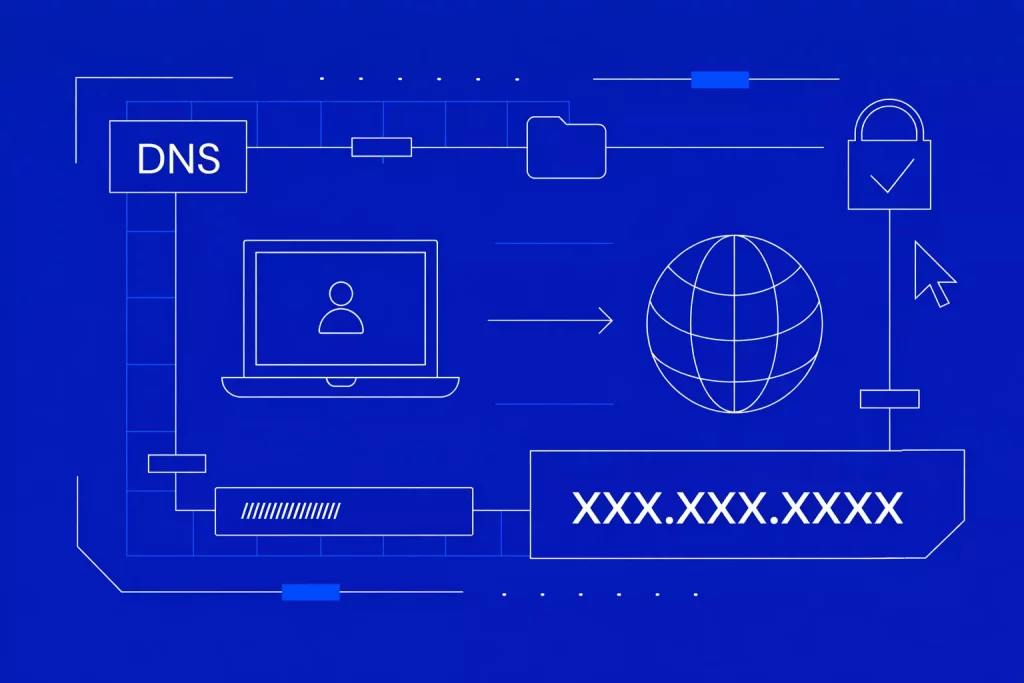
Technically, a domain name is a label connected to an IP address through the Domain Name System (DNS). Every website on the internet lives on a server with a unique numerical IP address, like 104.21.55.8. Because nobody wants to memorize those numbers, domain names exist as a human-friendly shortcut. DNS translates “yourstore.com” into the correct IP address behind the scenes, every single time someone types that name into a browser.
You do not own a domain name outright. You register it, which means you pay for the exclusive right to use it for a set period, typically one to ten years. Registration is done through a domain registrar, which is an accredited company authorized by ICANN (the Internet Corporation for Assigned Names and Numbers) to sell and manage domain registrations. Popular registrars include Namecheap, GoDaddy, Cloudflare Registrar, Google Domains (now Squarespace Domains), and Spaceship.
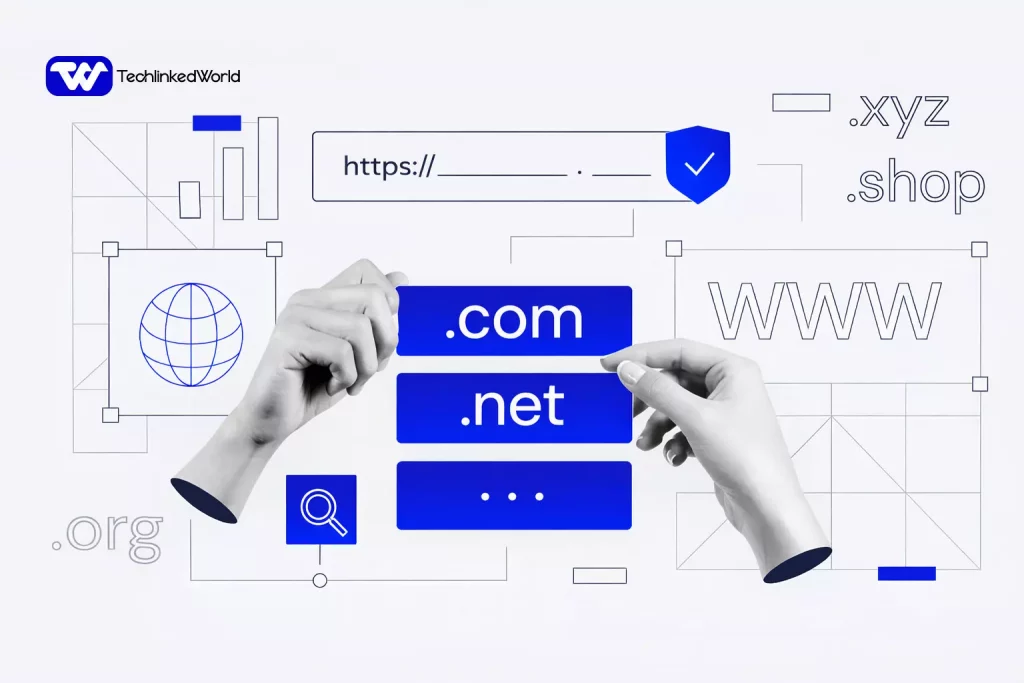
Domain names consist of two parts. The second-level domain is the unique name you choose — for example, “yourstore” in “yourstore.com.” The top-level domain (TLD) is the extension that follows: “.com,” “.net,” “.org,” “.io,” and hundreds of others. The combination must be globally unique. Once someone else registers “yourstore.com,” no one else can use that exact domain name until they release or let it expire.
The average cost to register a .com domain is between $9 and $15 per year at standard pricing, though promotional first-year rates can be as low as $1. The key watch-out is that renewal rates (what you pay in year two and beyond) are almost always higher than the introductory price. Always check the renewal rate, not just the registration price, before committing to a registrar.
What is Web Hosting?
Web hosting is a service that provides the server space where your website’s files are stored and served to visitors. If a domain name is your address, web hosting is the physical building at that address: the actual location where everything your website contains (images, pages, code, databases, and videos) is stored and made accessible over the internet.
When someone types your domain into their browser, DNS translates the address, connects to your hosting server, retrieves your website’s files, and displays them in that person’s browser. The hosting server runs 24 hours a day, 7 days a week, ready to serve your content to anyone who requests it. The moment your hosting goes down, your website disappears, even if your domain is perfectly registered and your website is beautifully designed.
Web hosting comes in several types, each suited to different needs and budgets.
What is Shared Hosting?
Shared Hosting is the most affordable entry point, typically ranging from $2 to $10 per month. Multiple websites share the resources of a single physical server, including CPU, RAM, and bandwidth. It is appropriate for small websites with low to moderate traffic. The downside is that resource-heavy neighboring websites can slow your site down, a phenomenon sometimes called the “bad neighbor effect.”
What is VPS Hosting?
VPS Hosting (Virtual Private Server) gives your website a dedicated portion of a server’s resources, even though the physical machine is shared. This typically costs $15 to $80 per month and suits websites that have outgrown shared hosting but do not yet need a dedicated server.
What is Dedicated Hosting?
Dedicated Hosting means an entire physical server is reserved exclusively for your website. It is the most powerful and most expensive option, starting at around $80 to $300 or more per month, and is typically used by large enterprises or high-traffic platforms.
What is Cloud Hosting?
Cloud Hosting distributes your website across multiple interconnected servers, offering excellent scalability and uptime. Providers like AWS, Google Cloud, and DigitalOcean operate on this model. Pricing varies widely based on usage.
What is Managed WordPress Hosting?
Managed WordPress Hosting is a specialized category where the hosting provider handles WordPress-specific tasks, including updates, security, backups, and performance optimization. Providers like Kinsta, WP Engine, and Flywheel are leaders in this space.
The hosting provider you choose directly affects your website’s speed, uptime, and security. These factors, in turn, affect your SEO rankings. Google considers page speed a confirmed ranking signal, and a hosting server with slow response times or frequent downtime will cost you both traffic and trust.
What is a Website?
A website is the collection of content, pages, and functionality that visitors actually interact with when they arrive at your domain. It includes everything visible and functional: the homepage, about page, product listings, blog posts, contact form, images, navigation menus, and any interactive elements. Your website is the purpose, the reason the domain and hosting exist in the first place.
A website is built using a combination of technologies. At the most basic level, web pages are written in HTML (Hypertext Markup Language), styled with CSS (Cascading Style Sheets), and made interactive with JavaScript. These files are what your hosting server stores and sends to browsers on request.
In reality, most people do not write raw HTML to build their websites. Instead, they use a Content Management System (CMS) or a website builder that handles the technical construction for them.
What is the WordPress CMS?
WordPress is the most widely used CMS in the world, powering over 43% of all websites on the internet as of 2025. It is an open-source platform that you install on your hosting server, giving you complete control over design and functionality through thousands of themes and plugins. WordPress requires both a domain and self-managed hosting.
What is Website Builder Do?
Website builders like Wix, Squarespace, Shopify, and Webflow bundle the website creation tool, hosting, and sometimes a domain into a single monthly subscription. This simplifies setup considerably, but typically offers less flexibility and more vendor lock-in than a self-hosted WordPress site.
What is a custom-built website?
Custom-built websites are developed from scratch by web developers using frameworks like React, Next.js, or Laravel. These offer maximum flexibility and performance but require significant technical investment.
The website itself, including its quality, content depth, structure, and user experience, is what search engines like Google actually evaluate and rank. A domain and hosting are infrastructure. The website is the substance.
Domain vs. Hosting vs. Website: The Key Differences at a Glance
People often confuse these three because they are frequently purchased together and from the same company. Understanding their distinct roles makes the entire system click into place.
What does a domain name stand for
A domain is your address. It is what people type to find you. It is registered annually through a domain registrar. Changing your domain means rebranding, because you lose the recognition and SEO equity built on the old address.
How Web Hosting Actually Work?
Hosting is your server space. It is where your files live. It is paid for monthly or annually through a hosting provider. You can change hosting providers without changing your domain name; you simply update your DNS records to point to the new server.
How a Website Work?
A website is your content and design. It is what visitors see and interact with. It lives on your hosting server and is accessed via your domain. You can redesign or entirely rebuild your website without changing your domain or switching your hosting provider.
The three are independent but interdependent. You need all three for a functional website on the internet. The domain connects people to the right server. The hosting makes the files available around the clock. The website gives those files meaning, value, and purpose.
Do You Need to Buy a Domain and Hosting from the Same Company?
No, and in many cases, buying them separately is the smarter decision. One of the most common mistakes beginners make is assuming they must purchase their domain and hosting from the same provider, because that is how most providers package their offerings.
In reality, you can register a domain with any accredited registrar and point it to any hosting provider in the world by updating your nameservers. Nameservers are DNS settings that tell the internet which hosting provider’s servers your domain should direct traffic to. The process takes about two minutes, and DNS propagation typically completes within a few hours.
Why would you separate them? Because domain registrars and hosting providers are often not equally good at both. Some registrars offer the best domain pricing and free WHOIS privacy protection, but mediocre hosting.
Some hosting providers offer excellent performance and support, but overcharge for domain registration. Buying each service from the specialist that does it best, rather than the bundle that combines it conveniently, is a more intelligent long-term decision.
Separating them also protects you. If you ever want to move to a better hosting provider, you simply update your nameservers. Your domain stays untouched, your email records stay intact, and your SEO equity is unaffected.
Can I have a Domain Without Hosting?
Yes, you can register a domain without hosting. The domain will exist in the global DNS system, reserved under your name, but it will not lead anywhere. Visitors who type it into a browser will see an error page or a placeholder page from the registrar.
This is actually a common practice for domain investors, people who register domain names they believe will be valuable in the future and hold them without building anything. It is also common for businesses that want to secure a domain early, before they are ready to build.
However, a domain without hosting cannot display a website. It has the address, but no building at that address.
Can I have Hosting Without a Domain?
Technically, yes, but practically speaking, it makes almost no sense for a public website. A hosting server has an IP address, and you could share that IP address directly so people could visit your site by typing the raw number. But no real visitor does that, and search engines will not rank an IP address-based site effectively.
Hosting without a domain is sometimes used for development and testing environments, scenarios where a developer wants to test a website on a live server before attaching a domain name and making it public. For any website intended for a real audience, a domain is essential.
How Domain, Hosting, and Website Work Together: A Complete Example
Imagine you want to build an online bakery called “SunriseBakery.” Here is exactly how the three pieces come together.
First, you register the domain “sunrisebakery.com” through a registrar like Namecheap. You pay $10.98 for the year. The registrar stores your domain in the global DNS system and gives you control over its DNS settings.
Second, you purchase a shared hosting plan from a provider like SiteGround or Hostinger. You pay around $3 to $8 per month. The hosting provider gives you server space and provides you with nameserver addresses, something like “ns1.siteground.com” and “ns2.siteground.com.”
Third, you log into your domain registrar’s dashboard and update your domain’s nameservers to point to your hosting provider’s nameservers. Within a few hours, DNS propagation is complete, and the internet knows that “sunrisebakery.com” points to your SiteGround server.
Fourth, you install WordPress on your hosting server, choose a bakery theme, and start adding pages, products, and photos. This is the website you are building, the content and design that visitors will actually see.
Now, when anyone types “sunrisebakery.com” into their browser anywhere in the world, DNS translates the domain to your hosting server’s IP address, the server delivers your WordPress files, and the visitor sees your beautiful bakery website in their browser. The entire chain (domain, DNS, hosting, and website) works in under a second.
What is a Website Builder and How Does It Fit In?
A website builder is a platform that combines the website creation tool and hosting in a single package, and often includes a domain name as well. Squarespace, Wix, Shopify, and Webflow are the most widely used examples.
With a website builder, you do not manage a hosting server yourself, you do not install a CMS, and you often do not need to touch DNS settings. Everything is managed through a single dashboard. This simplicity is the primary appeal for non-technical users.
The tradeoff is flexibility and control. Website builders are generally less customizable than a self-hosted WordPress setup. Moving your website away from a builder is often difficult or impossible because your content is tied to their platform. And if the pricing changes or the company shuts down, your options are limited.
For small businesses, creatives, and personal brands that prioritize simplicity over customization, website builders are a perfectly valid choice. For businesses that expect significant growth, value full ownership of their data, or need specific technical capabilities, self-hosted solutions with a separate domain and hosting provider offer far more long-term flexibility.
Which Should You Set Up First: Domain, Hosting, or Website?
The logical order is domain first, then hosting, then website, and there are practical reasons for that sequence.
Registering your domain first secures your brand name before someone else takes it. Good domain names, especially clean .com names, are increasingly scarce. Securing yours early, even if you are not ready to build, is always the right move.
Once your domain is registered, you select and purchase a hosting plan suited to your expected traffic and technical needs. After connecting your domain to your hosting via nameservers, you install your CMS or website builder and begin building your website.
In practice, many people do all three in a single session from the same provider, and that is fine as a starting point. The important thing is understanding that these are separate decisions you can revisit and change independently as your needs evolve.
FAQs about Domain vs. Hosting vs. Website
What is the difference between a domain and hosting?
A domain is your website’s address on the internet, the name people type to visit your site, like “example.com.”
Hosting is the server where your website’s actual files are stored and made accessible online. You need both to run a functional website. The domain gets people to the right location, and the hosting serves your content when they arrive.
Do I need both a domain name and web hosting?
Yes, you need both a domain name and web hosting to have a live website on the internet. A domain without hosting has no content to display.
Hosting without a domain has no address that people can easily find. Both are required, though they do not need to be purchased from the same company.
Can I use a free domain with paid hosting?
Yes, many hosting providers offer a free domain name for the first year when you purchase a hosting plan. This is a common promotional offer from providers like Bluehost, Hostinger, and SiteGround.
However, free domains from hosting providers are typically only free for the first year, after which standard renewal rates apply. It is worth comparing the renewal price before accepting a “free” domain offer.
What happens to my website if I switch hosting providers?
Your website content will not automatically transfer when you switch hosting providers; you need to migrate it manually or use a migration tool.
However, your domain name is completely unaffected by changing hosts. You simply update your domain’s nameservers to point to the new hosting provider, and DNS propagates the change within a few hours to 48 hours. Your domain, email records, and SEO equity remain intact.
Is a website builder the same as web hosting?
Not exactly, but a website builder includes hosting as part of its service. Platforms like Wix and Squarespace bundle the website creation tools, server space, and often a domain into a single monthly subscription.
The key difference from traditional web hosting is that you do not have access to or control over the underlying server; the platform manages all of that for you. This is simpler but less flexible than purchasing hosting separately and installing your own CMS.
How much does a domain and hosting cost together?
A .com domain registration costs approximately $10 to $15 per year at most registrars. Entry-level shared hosting typically costs $2 to $10 per month, often with a significant discount in the first year.
Together, you can start a website for as little as $25 to $50 in the first year. The most important cost to watch is the renewal price, because both domains and hosting plans often increase significantly after the introductory period ends.
Can I have a domain name without a website?
Yes. You can register a domain name and simply hold it without building a website. The domain will exist in the DNS system under your name, and no one else can register the same address.
This is common for businesses that want to secure their brand name early, domain investors who purchase valuable names to sell later, or developers who are not ready to launch yet. Until you add hosting and build a website, visitors typing the domain will see a blank or placeholder page.
What is the difference between a domain and a URL?
A domain is the main address component of a website, for example: “techlinkedworld.com.” A URL (Uniform Resource Locator) is the complete address of a specific page on the internet, including the protocol, domain, and any path — for example, “https://www.techlinkedworld.com/about-us.” Every URL contains a domain, but a domain itself is just one part of a full URL.